

The problem with most gamer girl outfits is that they are bought for one job and judged by another. A top that looks soft and flattering in a mirror can turn shiny, washed out, or oddly transparent under a ring light. Leggings that feel fine for a coffee run can ride, twist, or go sheer the moment you sit in a gaming chair for three hours. A hoodie that reads as cozy in person can swallow your whole frame on a webcam, where the camera crops you at the chest and flattens everything it sees. So the outfit fails twice: once on stream, where your audience sees the flattened version, and once off stream, where you are stuck wearing clothes chosen for a lens instead of a life. The fix is not two wardrobes. The fix is learning the small set of checks — fabric behavior, fit under sitting posture, color under your actual lighting, and the platform rules that quietly shape what you can wear — that let a single outfit pass both tests. This guide works through those checks in the order you would actually use them: what the camera does to clothes, which fabrics survive both worlds, how fit changes when you sit, how to build outfits around pieces you can wash and re-wear, and how to test everything before stream day instead of during it.
Start here: Browse the gamer girl apparel collection for the base pieces this guide builds around, then use the checks below to pick the ones that will work on your camera and in your day.
Key Takeaways
- The camera is a second fitting room: it crops, flattens, and shifts color, so every outfit needs a camera test, not just a mirror test.
- Matte, mid-weight fabrics with a little structure behave best in both worlds; thin, shiny, or very dark fabrics are the usual failure points.
- Fit for streaming means fit while seated — waistbands, hems, and necklines should be checked from your chair, at your desk height.
- Lighting decides color more than the garment does. Match your bulb temperature to your camera’s white balance and your clothes will look the same on screen as they do in the room.
- Care labels are a buying tool, not fine print: fiber content and care instructions predict how a piece will look after ten washes, not just on day one.
- Platform attire rules are a real design constraint, and they are easy to design around once you know where the lines are.
Table of Contents
- Why the Camera Changes Everything
- Fabrics That Behave in Both Worlds
- Fit From the Chair, Not the Mirror
- Color, Light, and the White Balance Trap
- Building Outfits That Repeat Well
- The Rules Nobody Mentions Until a Stream Gets Flagged
- Care: Keeping the Outfit Working After Wash Ten
- Our View
- FAQ
- Sources
- Recommended
Why the Camera Changes Everything
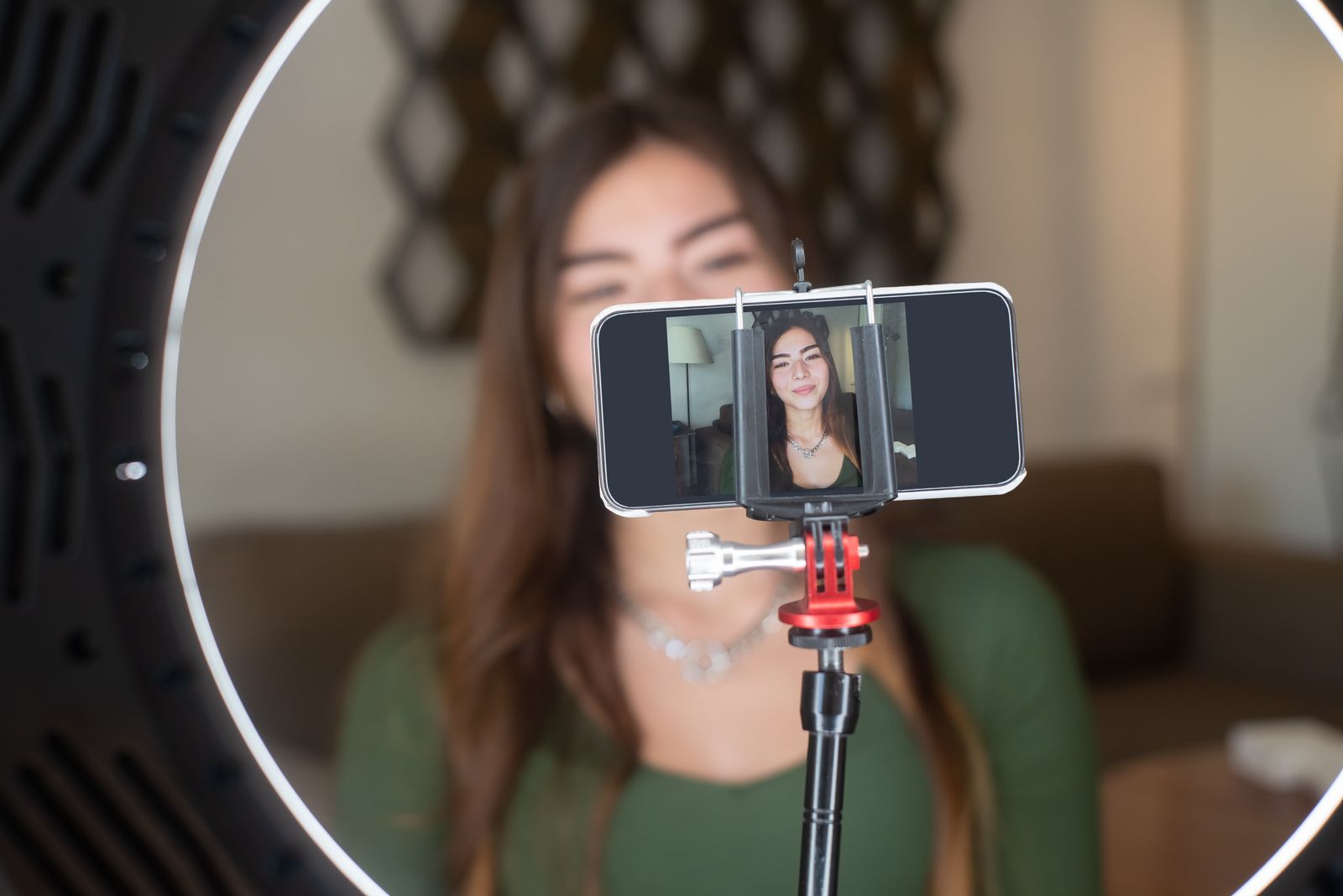
A webcam is not a small mirror, and treating it like one is where most outfit problems start. A mirror shows you a full-length, three-dimensional, moving reflection in the light you happen to be standing in. A webcam shows your viewers a cropped rectangle — usually head, shoulders, and part of your torso — compressed, color-shifted, and lit by whatever your room and your ring light produce together. Pieces that rely on their full silhouette, like a long cardigan or a high-low hem, lose their whole point inside that crop. Pieces with fine patterns can shimmer and crawl on video as the camera struggles to resolve them. And because the frame cuts off at the desk, the part of the outfit your audience actually sees is the part most people spend the least time choosing: the neckline, the shoulders, and the first few inches below them.
The desk itself is part of the outfit problem, which is why the ergonomics guidance streamers borrow from office work matters here. The Mayo Clinic’s ergonomics guide walks through chair height, monitor distance, and posture in detail, and every one of those choices changes what your clothes do on camera: a chair set too low drops your shoulders below the frame line, a monitor placed too far away makes you lean in and bunch fabric at the neck, and a hard desk edge pressing into your forearms will have you tugging at sleeves all stream. OSHA’s computer workstation eTool makes the same point from the safety side — the workstation should be adjusted to the person, not the other way around. Applied to outfits, that means you set up your chair and desk first, in the position you will actually stream in, and only then judge what you are wearing. An outfit checked standing in a bedroom doorway is being tested for a job it will never do.
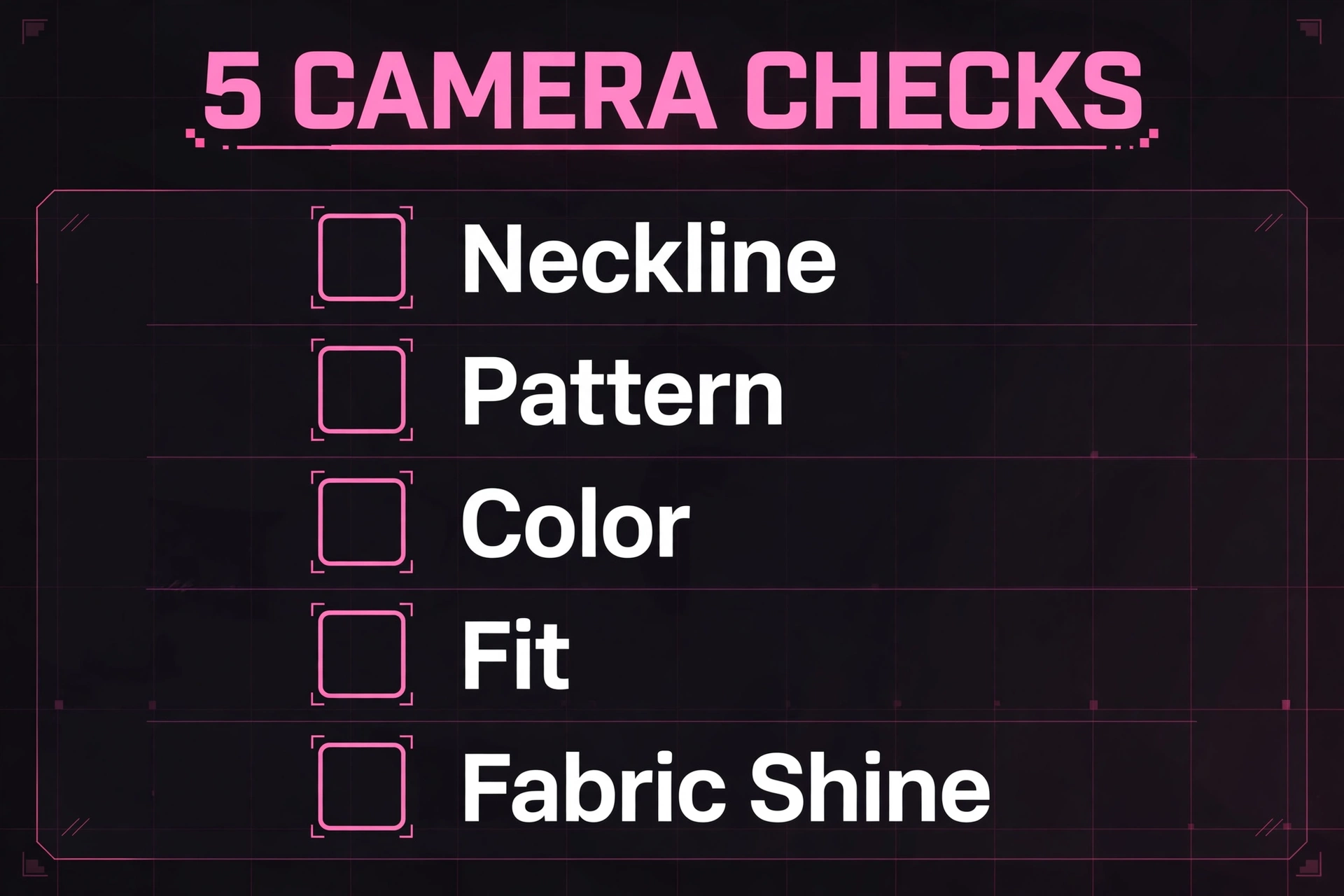
| Check | In the mirror | On camera |
|---|---|---|
| Neckline | Judged by eye level | Judged from above or below, depending on camera height |
| Pattern | Fine detail reads clearly | Fine detail can shimmer or blur |
| Color | True in room light | Shifted by bulb temperature and white balance |
| Fit | Judged standing | Revealed sitting, leaning, reaching for controls |
| Fabric shine | Mild glow | Hard specular highlights under ring lights |

Fabrics That Behave in Both Worlds
Fabric is where on-stream and off-stream performance is actually decided, long before style enters into it. The single most useful habit is reading the fiber content before you fall for the color. Federal labeling rules exist precisely so you can do this: the FTC’s textile labeling guide explains that garments sold in the United States must disclose their fiber content by generic name and percentage, the country where they were made or processed, and who is responsible for them. That little label is a prediction. A high cotton percentage promises softness and breathability for everyday wear, and also promises a fabric that absorbs moisture, holds it, and can look heavy and dark where it gets damp during a long, warm stream. Synthetic fibers behave the opposite way, which is why athletic wear leans on them.
The mechanism is worth understanding once, because it explains most of what you will feel. As a moisture-wicking explainer puts it, wicking is not absorption — the fabric moves sweat along the surface of its fibers through capillary action so it can evaporate, while polyester’s very low moisture regain means the fiber itself barely takes water in at all. For a streamer, that translates to a top that still looks dry and holds its shape in hour three of a session. For off-stream life, it translates to the same top surviving a warm commute or a convention floor without going limp. The trade-off is that pure synthetics can feel less soft against the skin and can hold odors more than natural fibers, which is why blends exist: a cotton-polyester blend with a matte finish is often the practical middle ground for pieces you will wear all day and then stream in at night.
Shine is the second fabric decision, and it is mostly a lighting problem in disguise. Satin, cheap sequins, and glossy stretch fabrics throw hard highlights under direct light, and those highlights are what make a garment read as costume-like on camera even when it looks elegant in person. Matte knits, brushed fleece, ribbed cotton, and denim sit quietly under the same light. Texture, used carefully, is the matte fabric’s reward: ribbing, cable knit, and embroidery all give the camera something to hold onto without shimmer, which is why a ribbed long-sleeve top photographs richer than a flat one in the identical color. If you love a statement fabric, the working compromise is placement — keep the shiny or sheer element where the camera crop and your own comfort both allow it, such as sleeves, an overskirt, or a layered piece over a matte base, rather than across the whole torso.
Weight matters as much as fiber. Very thin fabrics show every layer beneath them under bright light, including bra straps, seams, and the outline of a microphone pack. Very heavy fabrics bunch at the waist when you sit and can look bulky in a tight frame. The middle weights — the fabrics that drape but hold a line — are the ones that survive both the chair test and the street test, and you can judge them in the store with one squeeze: if you can see your hand’s outline clearly through a single layer held up to the light, that fabric will need a lining or a layer on stream.
Fit From the Chair, Not the Mirror
Every fit check in this section happens seated, because seated is the job. Sit in your streaming chair, at your desk, hands on your keyboard or controller, and have someone take a photo from where your camera sits — or record thirty seconds of test footage and watch it back. Necklines that are modest standing can gap when you lean forward to read chat. Waistbands that feel fine standing can dig, roll, or slide during a long session, and high-waisted bottoms earn their popularity with streamers honestly: they stay where they were put through hours of sitting, standing for breaks, and sitting again. Sleeves deserve the same test. A sleeve that is perfect at rest can pull tight across the shoulder every time you reach for a mouse, and that constant small tug is visible on camera as fidgeting even when you do not feel it.
Off stream, the seated test still serves you, because modern life is also mostly seated — cars, classes, offices, and café tables all ask the same questions of an outfit that a streaming chair does. The difference is movement between sittings, so add one walk-around check: waistbands that stay put sitting but migrate walking will annoy you in both worlds, just on different clocks. Shoulder seams are the quiet tell of good fit in both worlds too. A seam that sits at the edge of your shoulder looks deliberate on camera and tailored on the street; a seam that droops halfway down your arm reads as borrowed in both. If you are between sizes in a piece you love, the camera usually forgives the larger size in soft fabrics and punishes it in stiff ones, while the street reverses that judgment — which is another argument for the soft, structured middle weights from the fabric section.
Layering is the practical answer to most fit conflicts. A fitted base layer that you trust — smooth, matte, the right neckline — plus one changeable outer layer gives you two outfits for the price of one and a half. On stream, the outer layer is your visual interest: the open overshirt, the cropped jacket, the cardigan you can shrug off when the room warms up. Off stream, the same outer layer is weather and context: it makes the base layer appropriate for a shop, a campus, or a family dinner. Streamers who build this way stop experiencing the pre-stream wardrobe crisis, because the decision shrinks from “what do I wear” to “which outer layer today.”
Color, Light, and the White Balance Trap
Most “this color looks terrible on me on stream” problems are lighting problems wearing a color costume. Cameras do not see color the way eyes do. Your eyes adjust to the light in a room automatically; a camera has to be told what white looks like under your light, and when it guesses wrong, every color in the frame shifts with it. The photography tutorial site Cambridge in Colour explains white balance as the process of removing those unrealistic color casts so that objects that are white in person render white in the image, and its color temperature table is the part worth bookmarking: candlelight sits at the warm end, household tungsten bulbs run warmer than daylight, and shade runs cool and blue. If your room mixes a warm desk lamp with a cool window, your camera is being asked to pick one truth, and your clothes will pay for the compromise.
The fix starts with the bulbs, not the wardrobe. The U.S. Department of Energy’s LED lighting guide notes that quality LEDs use far less energy and last far longer than incandescent bulbs, which matters for a light that may burn through every stream, but the streamer-relevant detail is consistency: pick one color temperature for every light in the room, set your camera’s white balance to match it instead of leaving it on auto, and mixed-light color casts mostly disappear. Once the light is stable, color choices get simple. Mid-tone colors — the dusty roses, sage greens, slate blues, and warm burgundies of the world — survive almost any remaining shift. Very pale colors blow out under bright ring lights and lose their detail; very dark colors crush into a single black shape and take your silhouette with them. Black is the classic trap: beloved off stream, it can turn a streamer into a floating head on camera unless texture or a contrasting layer gives the frame something to separate.
There is also a genuinely useful trick borrowed from television: avoid wearing the exact color of your background or your gaming chair. Separation is what makes a person readable in a small video window, and a mid-tone top against a darker room, or a darker top against a light wall, will do more for how “put together” you look than any single garment. If your setup includes RGB lighting that changes color, test your favorite outfits under the colors you actually use — a top that is gorgeous under neutral light can go muddy under purple, and it is better to learn that in a test recording than in a clip someone saves.

Building Outfits That Repeat Well
An outfit that works once is a costume; an outfit that works every week is a system. The system most working streamers land on is a small rotation of trusted bases — bottoms and base tops that have passed the chair test and the camera test — combined with a wider set of changeable pieces that carry the visual variety: outer layers, accessories, hair, and one statement item per outfit. This is also the structure that makes a wardrobe affordable, because the expensive mistakes in gaming fashion are almost never the statement pieces; they are the fifth pair of bottoms that almost fit. Spend the fitting effort on the bases, and let the fun pieces be cheap and changeable.
Off stream, the same system reads as a personal style rather than a uniform, because the changeable pieces are doing the expressing in both worlds. A graphic tee that nods to your game is the obvious example of a piece that genuinely works in both: on stream it is a conversation starter your chat can read, and off stream it is a normal, comfortable shirt that signals exactly as much gamer identity as you want it to. Streetwear built a whole lane out of that double duty — the way Korean street style mixes oversized graphic pieces with clean basics is a good study in outfits that photograph well precisely because they were designed to be lived in first. The lesson transfers directly: if a piece only makes sense inside a stream frame, it is a prop, and props are fine, but they should be bought with prop expectations and prop budgets.
Accessories deserve one paragraph of their own because they are the highest-value items in the frame. The camera crop means your audience sees your head, shoulders, and whatever is on them more clearly than anything else you own. A headset worn over styled hair, a choker or necklace that sits inside the neckline rather than fighting it, earrings that catch light without swinging into your microphone — these small pieces do more visual work per dollar than any garment below the frame line. Off stream, the same accessories are what make a repeated base outfit look intentional rather than repeated. Build the accessory kit once, keep it at the desk, and both of your wardrobes get more interesting for the same money.
The Rules Nobody Mentions Until a Stream Gets Flagged
Platform attire rules are a wardrobe constraint, and designing around them early is cheaper than redesigning after a warning. YouTube’s nudity and sexual content policy draws its lines around content intended to be sexually gratifying and around how much of the body is the focus of the frame, and it applies to ordinary clothing content as much as to anything else — an outfit video framed as a showcase of the body rather than of the clothes can run into trouble that a styling video wearing the identical garments would not. Twitch’s attire expectations work similarly in spirit. A walkthrough of the Twitch attire policy lays out the practical shape of it: streamers are expected to be covered appropriately for the content they are producing, context matters, and the safest reading is that your outfit should read as an outfit — something you could wear to the activity you are streaming — rather than as the point of the stream itself.
The useful takeaway is not fear; it is that the “works on stream” test includes a framing test. The same top can be unremarkable while you are playing a game and a problem in a just-chatting segment where the camera is closer and the clothing is the subject. Streamers who stay comfortably inside the lines tend to do three things without thinking much about them: they keep one layer in reserve at the desk for moments when they stand up or adjust the camera, they check new outfits in the actual frame and segment type where the outfit will appear, and they treat a platform warning as information about framing and context, not just about the garment. Off stream, none of this costs anything — the reserve layer is a cardigan, the frame check is the camera test you were already doing — which is exactly why it belongs in the system from the start rather than bolted on after the first flagged video.
Care: Keeping the Outfit Working After Wash Ten
An outfit only “works” if it still works after ten washes, and the care label told you on day one whether it would. This is where the second FTC document earns its place in a fashion guide. The FTC’s guide to the Care Labeling Rule explains that manufacturers must attach permanent care instructions with a reasonable basis behind them — the label is not a suggestion the brand invented, it is a tested instruction for one safe way to clean the garment. When a label says wash cold and lay flat to dry, it is telling you the fabric or the print will not survive the alternative, and graphic prints, elastic, and dark dyes are usually what is being protected. Reading the label before buying, and walking away from high-maintenance pieces you know you will mistreat, is the least glamorous and most effective wardrobe skill there is.
Day-to-day technique comes from the laundry professionals. The American Cleaning Institute’s laundry basics covers the fundamentals that keep rotation pieces alive: sort by color and fabric weight, do not overload the machine, use the right amount of detergent rather than extra, and treat stains before they go through a wash and set. Two streamer-specific additions follow from the fabric section. First, the wicking synthetics that perform so well on camera hold odors more readily, so they benefit from being washed promptly after a long session rather than sitting in a hamper, and from being washed inside out to protect their surface. Second, anything with a print you love should meet the dryer as rarely as possible — heat is what cracks prints and relaxes elastic, and the pieces in your rotation are precisely the ones you cannot afford to have age early. A small drying rack near the streaming corner is not a lifestyle accessory; it is wardrobe insurance.
Our View
The streamers whose style looks effortless are not the ones with the most clothes. They are the ones who tested a small wardrobe properly — seated, on camera, under their own lights — and then stopped re-deciding it every day. Build the trusted bases, let the outer layers and accessories carry the variety, read the fiber and care labels before you buy, and let the platform rules shape the framing rather than ambush it. An outfit that passes those tests does not just work on and off stream. It stops being a decision at all, and that is the real prize.
The GamerChicksRule Team
FAQ
How many base outfits do I actually need to start?
Three trusted bases are enough to start: bottoms and base tops that have passed the seated camera test, rotated with different outer layers and accessories. Variety comes from the changeable pieces, not from owning more bases.
Why does my black outfit disappear on stream?
Very dark fabrics crush into one shape under typical webcam exposure, especially against a dark chair or room. Add texture, a contrasting layer, or a mid-tone piece so the camera has edges to separate, and check your lighting temperature before blaming the clothes.
Are shiny fabrics always a mistake?
No — they are a placement decision. Keep glossy or sheer elements to sleeves, layers, or smaller areas over a matte base, and test them under your actual stream lighting, where hard highlights show up far more than they do in a mirror.
How do I know if a fabric will go sheer on camera?
Hold a single layer up to a bright light in the store. If you can clearly see the outline of your hand through it, plan on a lining or a base layer under it for streaming, because bright ring lights are less forgiving than store lighting.
Do platform rules really affect ordinary gaming outfits?
They affect framing and context more than individual garments. An outfit that is unremarkable during gameplay can draw scrutiny in a close-up segment where clothing is the subject, so test new outfits in the kind of segment where you will actually wear them.
Sources
- OSHA Computer Workstations eTool
- Mayo Clinic office ergonomics guide
- U.S. Department of Energy on LED lighting
- Cambridge in Colour on white balance
- YouTube nudity and sexual content policy
- Sirency guide to the Twitch attire policy
- FTC textile and wool labeling guide
- FTC guide to the Care Labeling Rule
- American Cleaning Institute laundry basics
- Fabric guide to how moisture wicking works